



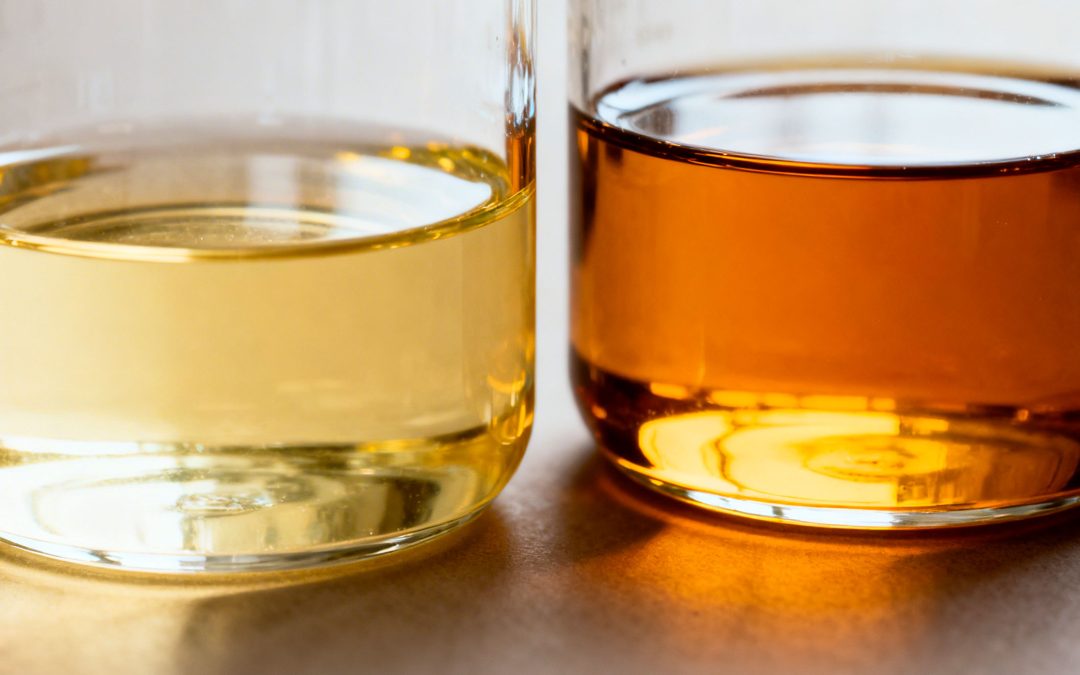
When we refuel at a service station, we usually pay attention to the price or the type of fuel our vehicle needs. However, there is a detail that many people are unaware of: fuel can have different colors.
Although we rarely see it because it stays inside the vehicle’s tank, the color of fuel actually serves an important purpose in the energy industry. It is not just an aesthetic detail, but a system that helps with identification, control and safety during transport and distribution.
What Is the Natural Color of Fuel?
In its pure state, fuel is almost transparent or slightly yellowish. Both gasoline and diesel leave the refinery with a very light tone, similar to some light oils.
However, before reaching service stations, fuel goes through different logistical processes and may receive additives and colorants that slightly change its appearance.
For this reason, depending on the type of fuel or its composition, it is possible to find tones that range from pale yellow to darker amber or even slightly greenish colors.
Fuel Colors Help Identify Different Products
One of the main reasons why fuel has different colors is to make it easier to identify during transport and storage.
Throughout the energy supply chain, different fuels and petroleum derivatives are handled. Being able to visually distinguish them helps professionals quickly recognize each product and avoid possible mistakes during handling.
This identification system is especially useful in storage facilities, tanker trucks or distribution centers where large volumes of fuel are managed every day.
Additives Also Influence Fuel Color
Another factor that can change the color of fuel is the presence of additives. These compounds are added to improve fuel performance and help protect the engine.
Some of their most common functions include:
- improving combustion
- reducing the formation of engine deposits
- protecting injection systems
- keeping the fuel system clean
Some additives have their own color, which can slightly modify the final appearance of the fuel.
Control and Safety in Fuel Distribution
In some cases, colorants are also used as control and traceability systems. Certain fuels intended for specific uses may contain particular dyes that distinguish them from fuels used in standard automotive applications.
This allows authorities and operators to easily detect potential misuse or irregularities in fuel distribution.
A Detail Most Drivers Never Notice
Most drivers never actually see the color of the fuel they use, since it remains inside the vehicle’s tank. However, behind this small detail there is an entire system designed to ensure safety, control and proper identification throughout the fuel supply chain.
When drivers refuel at service stations such as Alas Estaciones, they are using fuel that has gone through a carefully controlled distribution process to guarantee quality and reliability.
Although fuel color is something we rarely think about, it is part of the complex process that allows millions of vehicles to keep moving every day.